
I often hear from students and members of The Versatile Musician: What should I be practicing every day? In this video and blog post I will take you through the 6 piano exercises to do every day. Five of these exercises are for piano, with the final one being meant for building your ears. I personally practiced these exercises every day for years, and continue to go through them when I am getting my chops back in shape for a concert.
Watch the video below and I'll take you step-by-step through the process. Then read the blog to see the entire process!
Long Term VS. Short Term Practicing
A daily practice routine exists for two different reasons: to work on long term goals and shorter term goals.
Long term goals would include building your technique, developing your ears and mastering bigger concepts.
Shorter term goals would include mastering smaller skills and developing your repertoire.
It is crucial that pianists of every level develop a practice routine that includes time for developing their technical skills and ear training. In my experience spending 10-15 minutes a day is PLENTY to acquire and build the technical skills that you will need to be successful.
Exercise #1: Scales
You may have heard people tell you that scales are important, but did you ever ask why?
Fingerings
Scales are a great way to establish good fingering habits that will help you to play with much better facility in the long run. No more "running out of fingers" while you play a written or improvised passage.
Dexterity and Strength
Athletes run and lift weights and we...play scales. Working through this material will help you to have faster moving fingers and hands that are strong enough to maintain correct technique at all times.
Mastery of Keys
Working your way through your major and minor scales a little at a time will lead to you being a ninja pianist...in ANY KEY. No more flubbing a song because it's in the key of E; you'll have mastery no matter what key signature is at the start of the song.

Piano scale practice hacks
- Practice hands separately first, taking close note of the fingerings
- Try "blocking" the scales, playing each fingering grouping in a solid clump. (This will help you to see, feel and remember the patterns better!)
- Take note of which scales share the same fingerings (for example, C major, G major and D major) and practice those at the same time.
Exercise #2: Solid Chords
In this step, solid chords are moved through inversions. Mastering chord inversions will help you to have different inversions in your fingers, so you'll have no problem with any written music AND you'll be able to voice lead through songs better.
I like to think of Chord inversions as Jenga. "You take a note from the bottom and you put it on top..."

Remember that no matter what key you are in, the fingerings remain the same. This knowledge will make life so much easier for you!

Exercise #3: Broken Chords
Broken chords means you are taking the chord inversions you practice in Exercise #2 and you are playing one note at a time. The great news is that the fingerings stay the same! Keep this information in your mind and you will have a much easier time mastering this skill.
To level up: practice playing 4 note chords through the keys too. This will be a great challenge and a necessary skill if you decide to play Jazz Piano.

Exercise #4: Arpeggios
Arpeggios are the process of "opening up" a chord. Arpeggios help with your dexterity and hand strength and should not be skipped!
Check out the short video I made on the biggest mistake I see when people play arpeggios!

Exercise #5: Cadence/Chord Progression
Having primary chords under your fingers is extremely valuable, so I definitely included this in our 6 piano exercises to do every day. Using the Plagal and Perfect cadences, we voice lead them to make them ready to go. Perfect to harmonize a simple song like Happy Birthday, to play Holiday Songs or to accompany voice exercises.

Exercise #6: Ear Training Development
Even though this is a collection of 6 piano exercises, I definitely felt the urge to include some ear training. Building your ears will help you to become a more confident musician, will help you learn to play by ear and will make memorizing songs much easier as well.
In my exclusive online course Piano Technique and Ear Training, I include weekly ear training exercises that start very simply and build to more complex exercises.
We start out just singing notes and finding them on the piano and move our way up to singing scales in solfege, transcribing bass lines and guitar hooks by ear and eventually deciphering what chord inversion we are playing.
Practicing the 6 piano exercises every day
I always tell my students to set aside 10-15 minutes per day to work on technique. If you follow these easy six exercises and focus on practicing one key per week (or two weeks if you need more time!), then in half a year you will have achieved mastery in all 12 major and minor keys.
This is time well spent and will revolutionize your playing!
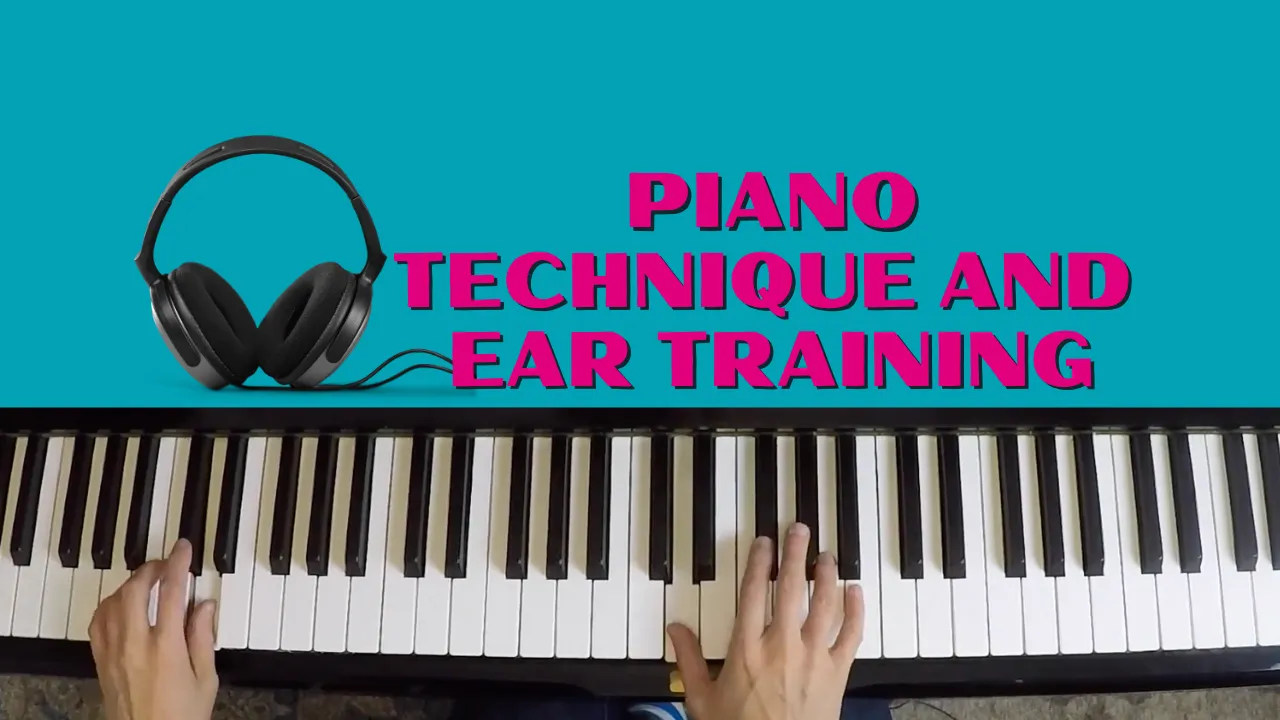
Want to improve your piano technique and ear training skills but don't have hours every day??
In Piano Technique and Ear Training, I have captured all of the technical requirements that pianists need into a practice routine that only takes 10 minutes a day.
Seriously! A short, to-the-point routine that you can get through in 10 minutes and then move on to whatever else you need to practice.
Every week we tackle a new key until you are able to play in all 12 major and all 12 minor keys with ease.
 How Much Does it Cost to Record and Album in 2024?